Paris Leaves Fashion Show in a Rage Photos
These days, photographers are merely as probable to snap people attending fashion shows as they are to shoot the shows themselves. How did nosotros get here?
Photographing people who go to fashion shows with the same alacrity as those modeling in way shows has become a routine part of fashion weeks around the earth. With Paris Fashion Week—mostly considered the most important of any global manner week—underway, photographers are flocking to the models, editors, influencers, buyers, and celebrities milling and mingling exterior picturesque venues like the Grand Palais, as though this is how things accept e'er been.
Yet, in the history of fashion shows, the focus on street fashion is a relatively contempo phenomenon, brought on by the rise of digital photography, a fascination with influencer culture, and the daily content needs of digital media brands.


Here'south a look back at how we got to where we are today.
The Early Days of Fashion Shows
At mode shows in the forties, fifties, and even the early on sixties, clothes were targeted to women in their thirties or older, who shopped twice a twelvemonth, for fall and jump. Attendees included American buyers who purchased front row tickets and, in exchange, received a dress pattern for replicating a blueprint to sell at their stores.
Also in the audience were editors and fashion illustrators, who, in absence of photography, sketched the dress and then sold the drawings to publications.
Although urgency effectually covering fashion shows increased after Christian Dior launched his "New Look" collection in 1947, exciting people over the notion of what manner could be, there was no urgency to disseminate renderings of those in the oversupply.


The Swinging Sixties
In the sixties, fashion underwent a sea change, equally designers began targeting young people with wearable regarded as somewhat scandalous. The transformation was seen on the streets of Swinging London, where women chopped their pilus into bobs and snatched up miniskirts and high boots.


Biba was one of the nearly influential boutiques of this period, and its founder, Barbara Hulanicki, understood the ability of fashion on the streets, worn by exuberant, beautiful young people.
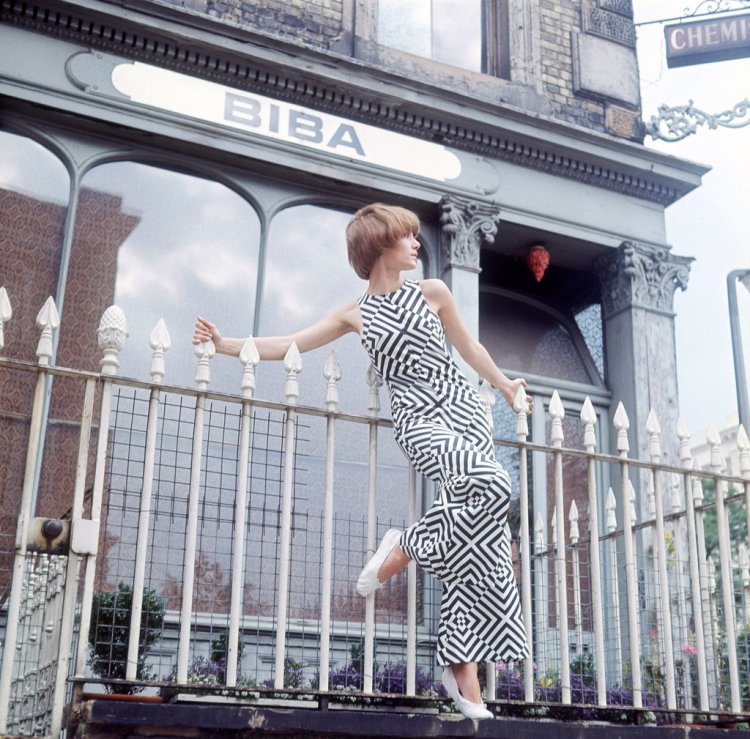
She hired a slew of chic, young women to staff Biba and, when her business expanded and the store needed to move, staged a public spectacle involving her stylish staff packing upward a moving truck in the street, looking cool every bit ever while doing it.

Past the end of the sixties, fashion shows themselves were condign more important in culture. The best of them, like Yves Saint Laurent'southward, attracted celebrities similar Liza Minelli and Diana Ross.
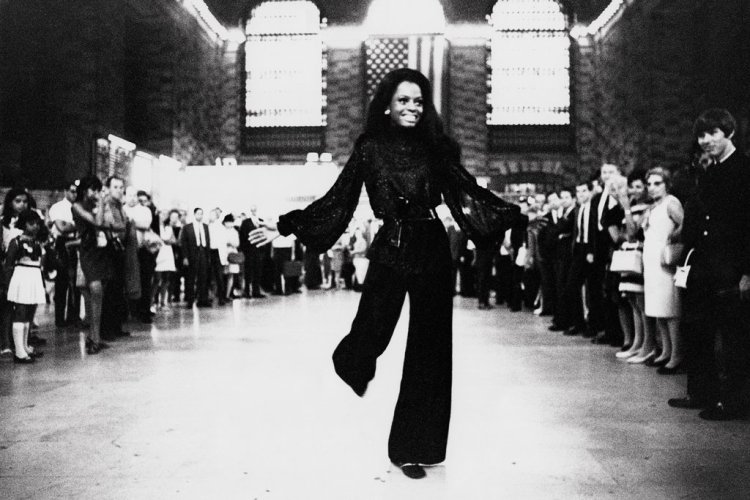
Photographers, who didn't tend to lug effectually actress motion picture and commonly had to salve information technology for capturing the collections themselves, were starting to snap more shots of the sidelines of fashion shows.
The Rise of the Supermodel
As the ease and sensuality of seventies dressing gave way to the glitz and ostentation of the eighties, another meaning transformation of the business organization took place. Supermodels became not only the ascendant faces of fashion, just also of glory culture.
The public was obsessed with the women who racked upwardly the most bookings for magazine covers, fashion shows, and advertisements. The women who were identifiable past their first names lonely: Naomi, Christy, Cindy, Linda, Claudia.

Glory tabloid culture, every bit promoted by magazines like Us Weekly, was on the ascent. And the supers ("supes"), the ascendant celebrities of the day, were therefore followed by photographers. This phenomenon non only illustrated their superstardom, but also foreshadowed the fascination with the "model off duty" that would grip the aughts.


The Online Aughts
Blogs like Scott Schuman's The Sartorialist and Tamu McPherson's All the Pretty Birds, which featured photos of stylish people taken on the streets, started seeding the internet around 2005. Non long after, interest in models when they were going from one rails evidence to the next rose.
Between manner shows, gorgeous girls with their hair and makeup ofttimes done from the evidence would dash out of a venue, commonly in some mix of terribly chichi athleisure and street clothes, a designer bag dangling casually off their arm, and slip into a blackness car taking them to their side by side job.


The model-off-duty await represented the confluence of street style and way week, and function of the reason way calendar week street style as a genre ever became a thing.
Plus, with the ascension of digital photography in the aughts, photographers didn't accept to relieve their film for the collections anymore, and could outset snapping away freely at the scene surrounding the shows.
The Ascent of the Fashion Editor
Another early target of street fashion photographers were editors, who had been known amongst the small and insular fashion industry for dressing stylishly. With street style photography becoming popular, editors were a regular field of study of interest outside the shows.
Italian editor Anna Dello Russo, who styled spreads for Japanese Vogue, was regularly stopped outside fashion shows to be photographed because she always seemed to exist wearing a total expect from the runways. (She didn't mix designer pieces because "I like to accept a dream and put information technology on me," she told New York magazine in 2010).

Carine Roitfeld, who served as editor-in-primary of French Faddy from 2001 through 2011, was also a popular subject for street fashion photographers, helping cement her reputation equally the nigh stylish adult female in the globe.

Fashion week street style likewise enhanced the visibility of influencers like Bryan Male child and Aimee Vocal, who became fixtures at the shows in the aughts afterward publishing successful fashion blogs, further legitimizing their place in the industry.


The Present Twenty-four hours
The ascension of street style at fashion week hasn't been without controversy. The scrum outside the shows, once nonexistent, became large and intense, similar paparazzi hounding a British majestic.
People started showing up to fashion calendar week dressed a certain way with the promise of getting photographed, whether they were attending the shows, a part of the industry, or neither. And, those in the industry, now finding themselves passing before a throng of cameras before entering a style prove, started dressing for the moment.


Critics pointed out that instances that once seemed serendipitous at present appeared frustratingly manufactured. "In that location is a genuine difference between the fashionable and the showoffs—and that is the current dilemma," wrote veteran fashion critic Suzy Menkes in T Magazine (2013).


Only, the debate subsided in a few years, and now, fashion week street style is an accepted part of the business organization of putting on shows.
Only now, instead of on blogs, nigh of the images trickle out over Instagram, where influencers and attendees can simply snap videos or images of their ain outfits to serve upwards to audiences who are at present able to connect to this world equally easily as the industry was once able to go along them out.
Fashion is infectious. Let's stick to the catwalk a little longer with these beauties:
- Unforgettable Photographic Moments: 2020'south "Big Four" Fashion Weeks
- What Fashion Will Look Like Post-Pandemic
- 2020'south Wondrous and Weird Manner Moments on the Catwalk
- If Cady from Hateful Girls Had a Shutterstock Search History
- The Devil Wears Prada: Andy's Shutterstock Vision Board
Cover prototype viaSaira MacLeod/Shutterstock.
0 Response to "Paris Leaves Fashion Show in a Rage Photos"
Post a Comment